
By Icon Tours | Travelites Blog
I almost didn't go to Cappadocia. It wasn't on my original itinerary. Istanbul was the plan — the mosques, the bazaars, the Bosphorus at sunset. A fellow traveler at a hostel in Ankara told me I was making a mistake. "You'll love Istanbul," she said. "Everyone does. But Cappadocia will rearrange something inside you." She was right.
When the Earth Decides to Sculpt
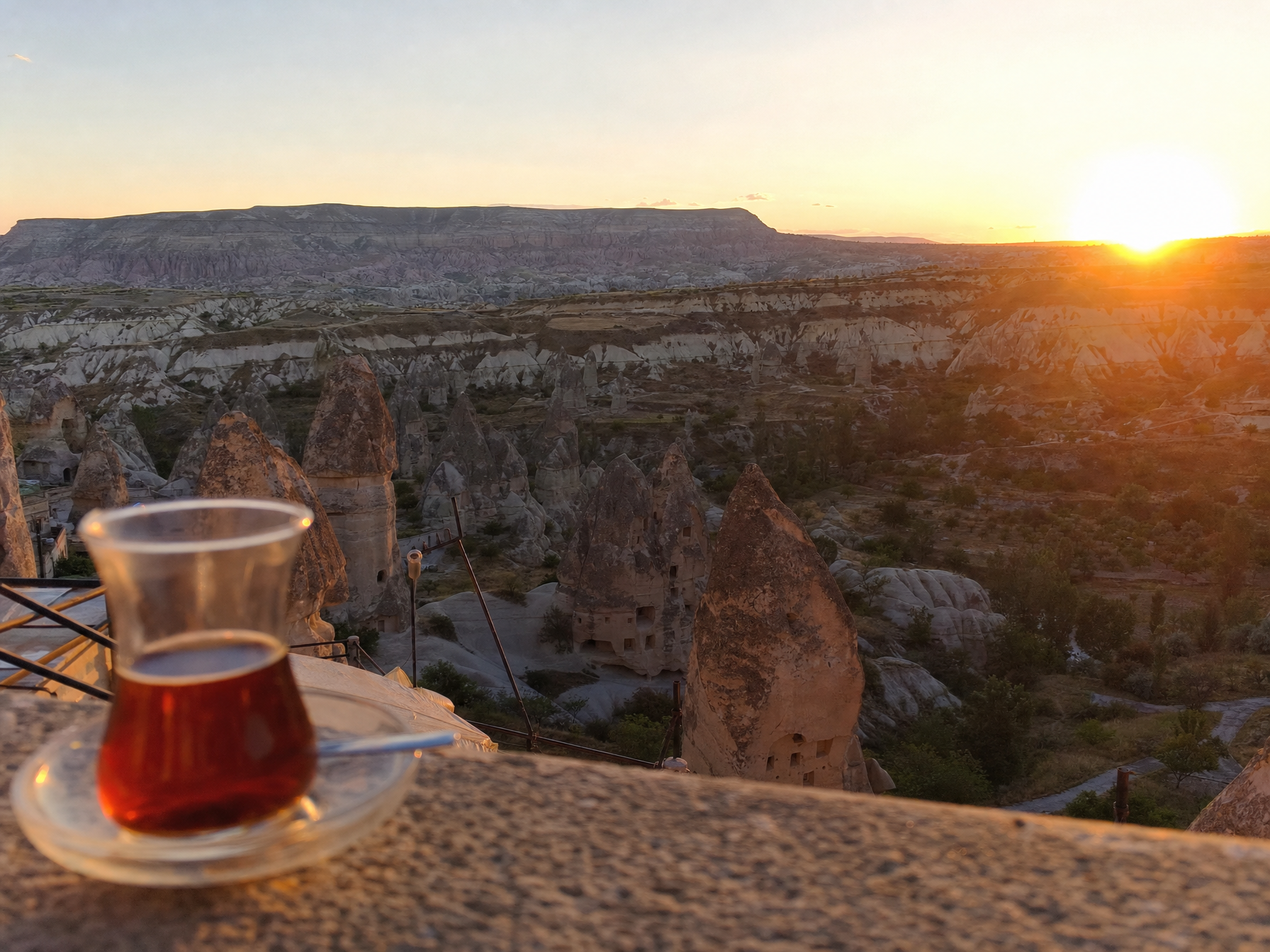
Nothing prepares you for the first glimpse of the fairy chimneys. I came in on a dolmus from Nevsehir at dusk, and the landscape shifted from ordinary Turkish countryside into something that looked like it belonged on another planet. Towering columns of soft volcanic rock, carved by millennia of wind and rain into shapes that no architect would dare propose — mushroom caps balanced on slender stems, cathedral-sized pillars honeycombed with ancient rooms. The light was doing that golden-hour thing where every surface seems lit from within, and I pressed my face against the bus window like a kid.
This is what second cities give you. Not the polished, museum-quality experience of a capital, but the raw, unscripted encounter with a place that hasn't yet learned to perform for tourists. Cappadocia has tourism, sure — but it hasn't been flattened by it. The edges are still rough. The surprises are still real.
Sleeping Inside the Mountain
My cave hotel in Goreme was carved directly into the rock face. The walls were cool and slightly damp, the color of bone. There was no minibar, no laminated room-service menu. Instead, there was a hand-woven kilim on the stone floor, a window cut into three feet of solid tufa, and a silence so deep I could hear my own heartbeat. I slept better in that cave than I have in any five-star hotel.
In the morning, the owner — a man named Mehmet whose family had lived in these caves for four generations — brought me tea on the terrace. Below us, the Rose Valley unfolded in layers of pink and amber. "My grandfather was born in that cave," he said, pointing to a dark opening across the valley. "Now it's a pigeon house." He laughed. History here isn't preserved behind velvet ropes. It's lived in, repurposed, still breathing.
Going Underground
The underground cities are where Cappadocia truly reveals its strangeness. Derinkuyu stretches eight levels deep — a subterranean metropolis that once sheltered 20,000 people from invading armies. I descended through narrow passages, ducking under stone doorways worn smooth by centuries of shoulders brushing past. There were stables, churches, wine cellars, ventilation shafts engineered with startling sophistication. The air was cool and mineral-scented. Standing in a chamber sixty meters below the surface, lit by a single bulb, I felt the weight of all the fear and ingenuity that had carved this place into existence.
Above ground, Cappadocia surprises differently. I hiked the Ihlara Valley alone, following a river through a canyon lined with Byzantine churches painted in fading ochre and indigo. I ate gozleme — savory flatbread stuffed with spinach and cheese — at a roadside stall where the woman making them had flour up to her elbows and no interest in my attempt at Turkish small talk. She just smiled, handed me the bread, and waved away my money when I tried to pay too much.
Dawn in the Sky
The balloon ride. I know — it sounds like every Instagram cliche you've ever scrolled past. But here's what the photos don't capture: the silence. A hundred balloons rising at dawn over the fairy chimneys, and the only sound is the occasional roar of the burner and the collective held breath of forty strangers floating above a landscape that looks like a dream someone forgot to wake up from. The valleys were filled with mist. The sun crested the horizon and painted everything tangerine. A woman next to me was crying quietly. I understood why.
The Case for Second Cities
We've been trained to travel to capitals. Paris, London, Tokyo, Rome. And those cities deserve their fame. But the second cities — the Cappadocias, the Luang Prabangs, the Oaxacas — offer something the headliners can't: the feeling of discovery. The sense that you're not following a script. That the place you're standing in hasn't been optimized for your consumption, and that's precisely what makes it extraordinary.
Cappadocia didn't just change my itinerary. It changed my philosophy. Now I always ask: what's the place nobody's telling me to go? That's usually where the real story lives.
Explore our carefully vetted tours, workshops, retreats, transfers, and stays around the world at www.icontours.com



No comments:
Post a Comment