
By Icon Tours | Travelites Blog
The barista at the corner café on Via dei Serragli didn't ask what I wanted on my third morning. He just started making it — a doppio espresso, slightly longer pull than standard, the way I'd ordered it twice before. He slid it across the marble counter with a nod. No words. Just recognition. That small moment — being known somewhere far from home — is what slow travel is actually about.
I'd come to Florence for two weeks, and it took me five days to stop feeling guilty about not "seeing things." No Uffizi line on Monday. No Accademia scramble on Tuesday. Instead, I walked the same route through Oltrarno every morning, noticing how the light changed on the stone facades, how the leather workshop on Via Maggio smelled different depending on what they were making — saddle-stitched journals on humid days, polished belts when the air was dry.
Oltrarno: Florence's Quiet Side
Cross the Ponte Vecchio and you step into a different Florence. Oltrarno is the artisan district — the side of the Arno where craftspeople still make things by hand, where neighborhood trattorias serve ribollita made from yesterday's bread, and where a glass of Chianti costs what it should. The tourist groups stop at the bridge. They rarely cross.
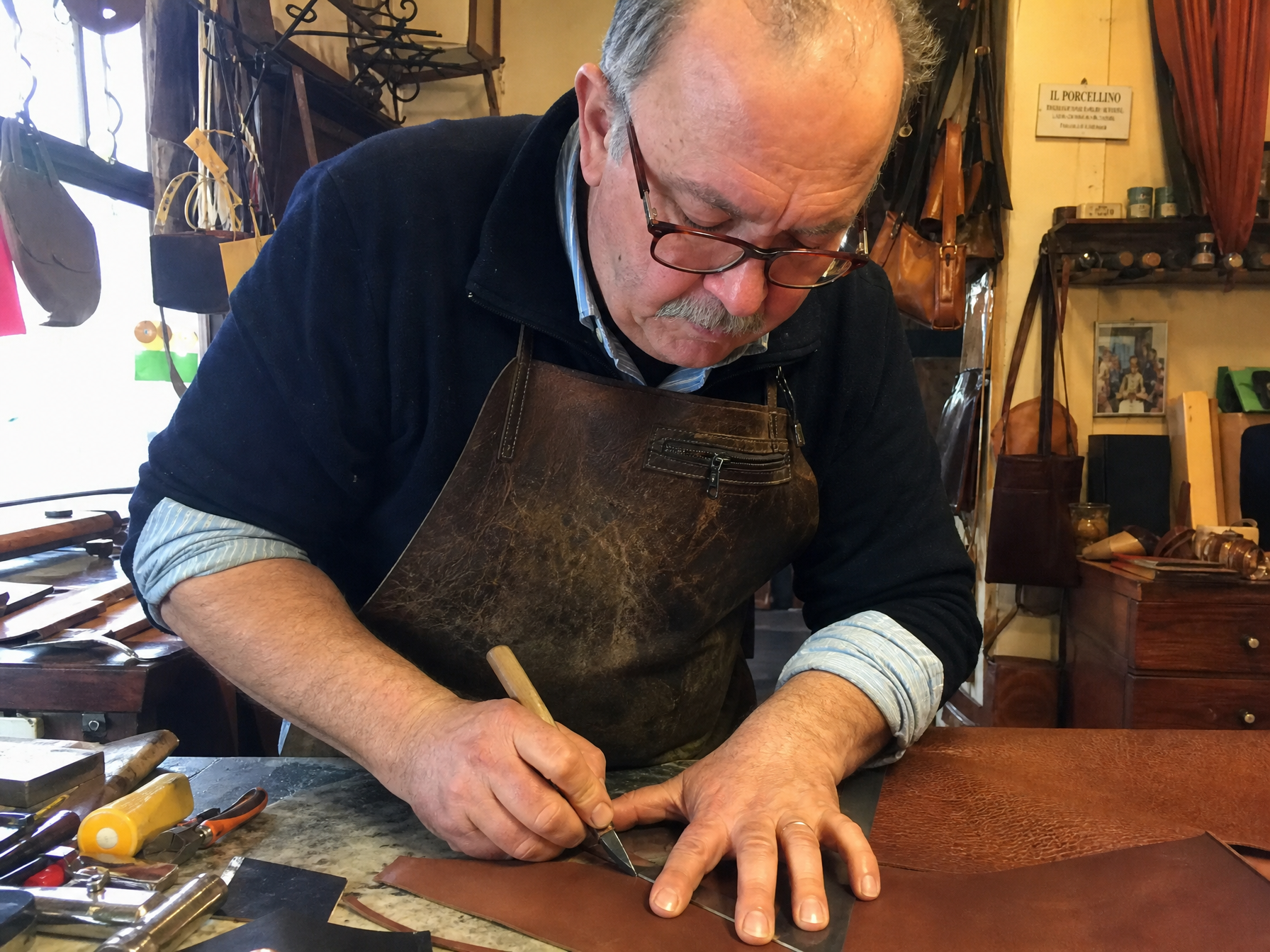
I found my workshop on the second day. Matteo, a third-generation legatoria owner, was binding a stack of handmade paper into journal covers when I peered through his open door. He waved me in. Over the next week, I came back four more times — watching him work, asking questions through my terrible Italian and his patient English, eventually buying a leather notebook that I'm writing in right now.
The Santo Spirito piazza became my living room. Every evening, locals gathered on the church steps with bottles of wine and paper bags of focaccia from the bakery across the square. No one performed for tourists because there weren't any. Just Florentines doing what Florentines do when the sun drops low enough to sit outside.
Piazzale Michelangelo at Different Hours
Every guidebook sends you to Piazzale Michelangelo at sunset. They're right — it's extraordinary. The entire city laid out below you, terracotta rooftops turning gold, the Duomo's dome catching the last light like a bronze crown. But here's what two-day visitors miss: Piazzale Michelangelo at dawn is better.
At six in the morning, the overlook is empty except for joggers and a man who sells espresso from a thermos. Mist lifts from the Arno valley in slow, ghostly waves. The Duomo emerges from the fog like a ship surfacing. The silence is complete. You can hear pigeons on the rooftops below. I went four mornings in a row and the light was different every time — peach one day, silver the next, pure gold on the third.
Why Two Weeks Changes Everything
In two days, Florence is a museum. In two weeks, Florence is a neighborhood. You develop a routine — the same morning walk, the same espresso, the same wave from the florist arranging sunflowers on Borgo San Jacopo. You stop navigating by map and start navigating by smell: coffee this way, fresh bread that way, the earthy tang of the leather district straight ahead.
Slow travel isn't about being lazy. It's about compression giving way to depth. You trade ten shallow experiences for three deep ones. You eat at the same trattoria three times and on the third visit, the owner brings you something that isn't on the menu. You walk the same streets until you notice the medieval graffiti scratched into a wall, or the tiny shrine tucked into a corner that a thousand rushed visitors walk past every day.
Florence rewards patience the way few cities can. The Tuscan light alone is worth staying for — the way it changes from the cool blue of early morning to the warm amber of late afternoon, painting the same stone facades in completely different moods every few hours.
The Practical Case for Staying Longer
Extended stays are also cheaper per day. A two-week apartment rental in Oltrarno costs less per night than three days in a hotel near the Duomo. You cook some meals with market ingredients — the Mercato di Sant'Ambrogio sells tomatoes that taste like the word "tomato" was invented for them. You buy wine by the bottle instead of by the glass. You walk instead of taking taxis because you know the shortcuts.
The Tuscan countryside is a day trip from your doorstep. Chianti vineyards, medieval hill towns like San Gimignano, the thermal baths at Saturnia — all within an hour or two. But when you live in Florence instead of visiting it, these excursions feel like outings from home rather than items on an itinerary.
On my last morning, the barista made my espresso without asking and said, "Ci vediamo." See you. Not goodbye — see you. That's the difference between visiting a city and belonging to it, even briefly.
Explore our carefully vetted tours, workshops, retreats, transfers, and stays around the world at www.icontours.com


No comments:
Post a Comment